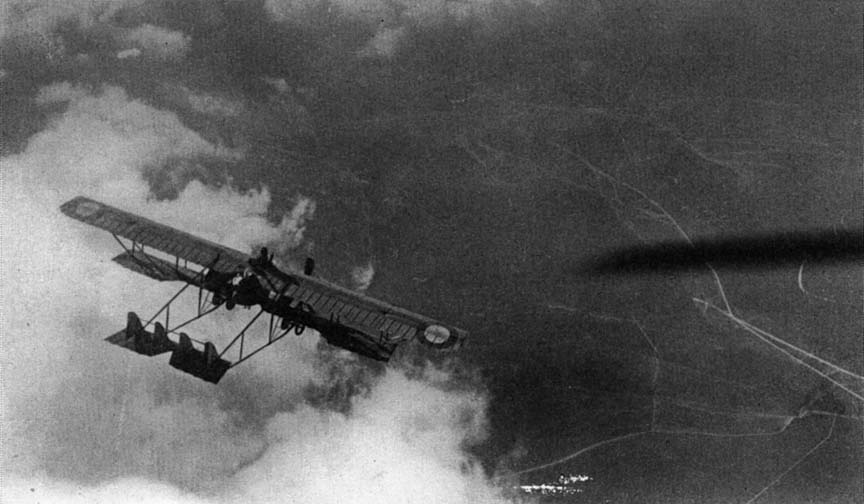
Performance and mechanical data are combined here for a faster, more compact read. Values describe the represented model or nearest clearly identified source variant.
Performance and mechanical specifications for Caudron G.4
Primary role
Reconnaissance and light bomber
Crew
2
Configuration
Twin-engine open-boom biplane
Powerplant
2 × Le Rhône rotary engines
Top speed
82 mph
Ceiling
14,100 ft
Published range
410 mi
Length
≈24 ft
Wingspan
≈58 ft
Gross weight
≈3,800 lb
02 · SERVICE CHRONOLOGY
FROM ORIGIN TO LEGACY.
A dated sequence follows the airframe from development through operational use and later evolution. The number of milestones follows the story rather than a fixed template, and each note explains why the event mattered—not only what happened.
ORIGIN
The G.4 entered service as one of the earliest practical twin-engine reconnaissance and light-bombing aircraft. [1]
DEVELOPMENT
Two engines offered reassurance over hostile territory, yet modest power and no single-engine margin limited survival. The G.4 captures the brief period when reconnaissance needs outran fighter and engine development. [1]
SERVICE HISTORY
As faster fighters made daylight operations increasingly dangerous, G.4 units shifted among reconnaissance, bombing, and night missions before more capable types replaced them at the front. [1]
CONTEXT & LEGACY
As faster front-line types replaced it, surviving aircraft continued in training and liaison roles. [1]
03 · ARCHIVAL IMAGE
THE AIRFRAME IN CONTEXT.
A documented photograph or archival reference connects the interactive model to a real airframe, operation, or preserved example.
A short, attributed line restores a human voice to the technical record. Period statements and later recollections are identified by the date label and accompanied by a source link.
“The G.4 was slow, but it would bring you home.”
René FonckFrench military aviator
The recollection points to the confidence inspired by two engines even when the aircraft had little excess power.
Focused facts connect the airframe's systems to the way it was built, flown, or used.
01
Central nacelle
Crew sat in a short nacelle between two engines, with the tail carried on an open boom structure.
02
Engine redundancy
The twin-engine layout offered a degree of continued-flight capability uncommon among early aircraft.
03
Wartime work
G.4s performed reconnaissance, bombing, and artillery-observation missions during the First World War.
06 · HISTORICAL FIELD NOTE
WHY IT MATTERS.
Twin engines and a central crew nacelle gave the G.4 useful endurance for reconnaissance and bombing while preserving a path home after an engine failure. Its open lattice structure typified early wartime aviation, when designers balanced observation, payload, and reliability before streamlined metal airframes became practical. [1]
Reference figures vary by variant, payload, configuration, altitude, test method, and source. Values here are an editorial orientation—not operational or flight-planning data.
Each numbered citation links to an operator, national museum, manufacturer, or established research institution. The scope note tells you exactly what that source supports, and each entry includes its retrieval date.
Where the represented model and source variant differ, the scope is labelled rather than silently treated as an exact match. Read the editorial policy, report a correction through the legal notice, or review 3D-model provenance in the attribution directory.