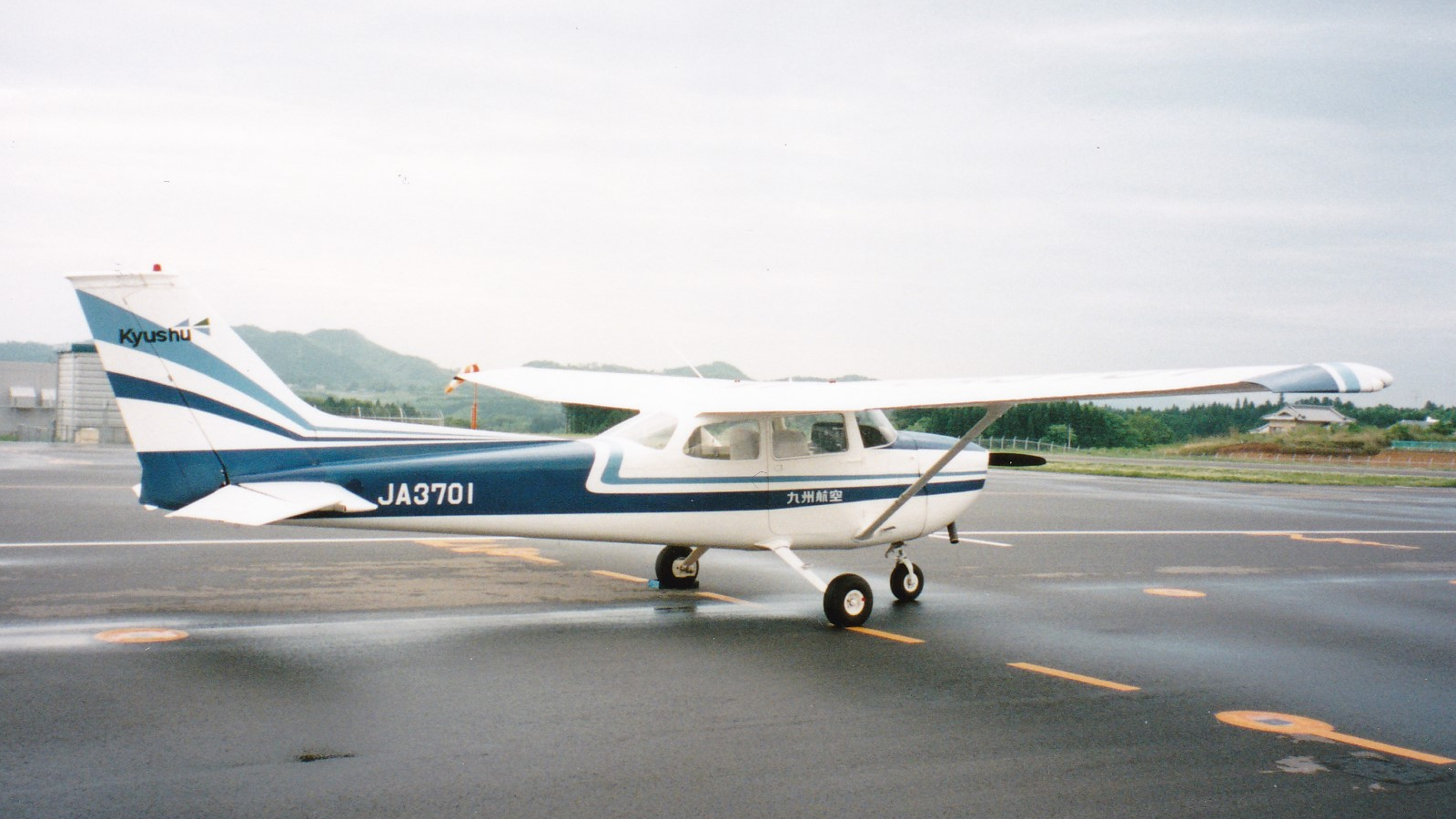
Performance and mechanical data are combined here for a faster, more compact read. Values describe the represented model or nearest clearly identified source variant.
Performance and mechanical specifications for Cessna 172 Skyhawk
Primary role
Primary trainer
Occupancy
Up to 4
Configuration
High-wing tricycle-gear trainer
Powerplant
1 × Lycoming IO-360 piston engine
Top speed
140 mph
Ceiling
13,500 ft
Published range
800 mi
Length
27 ft 2 in
Wingspan
36 ft 1 in
Max takeoff
2,550 lb
02 · SERVICE CHRONOLOGY
FROM ORIGIN TO LEGACY.
A dated sequence follows the airframe from development through operational use and later evolution. The number of milestones follows the story rather than a fixed template, and each note explains why the event mattered—not only what happened.
ORIGIN
The first 172 flew as a tricycle-gear development of the tailwheel Cessna 170 family. [1]
DEVELOPMENT
More than a single model, the 172 became a long-running training ecosystem: predictable handling, widespread parts support, and gradual avionics updates made it a common first cockpit for generations of pilots. [1]
SERVICE HISTORY
A modified 172 remained airborne for 64 days, 22 hours, and 19 minutes over Nevada, an endurance record that demonstrated the basic airframe's reliability under an extraordinary operating routine. [1]
CONTEXT & LEGACY
Production resumed after a decade-long pause, beginning the modern fuel-injected generation still used by flight schools. [1]
03 · ARCHIVAL IMAGE
THE AIRFRAME IN CONTEXT.
A documented photograph or archival reference connects the interactive model to a real airframe, operation, or preserved example.
A short, attributed line restores a human voice to the technical record. Period statements and later recollections are identified by the date label and accompanied by a source link.
“It is probably the most honest airplane ever built.”
Robert GoyerPilot and aviation writer
Goyer used “honest” to describe the Skyhawk's predictable response and enduring training value.
Focused facts connect the airframe's systems to the way it was built, flown, or used.
01
Production landmark
The 172 family is widely recognized as the most-produced aircraft line in history.
02
Training appeal
Stable handling, good outward visibility, and simple systems made it a flight-school standard.
03
Landing-gear choice
Tricycle gear distinguished the first 172 from its tailwheel Cessna 170 ancestry.
07 · HISTORICAL FIELD NOTE
WHY IT MATTERS.
Stable, forgiving, and economical, the Skyhawk became a foundational training aircraft and one of the most widely flown general-aviation designs. Decades of incremental updates transformed it from a simple four-seat airplane into a modern instrument trainer while preserving the predictable handling that made it familiar to generations of pilots. [1]
Reference figures vary by variant, payload, configuration, altitude, test method, and source. Values here are an editorial orientation—not operational or flight-planning data.
Each numbered citation links to an operator, national museum, manufacturer, or established research institution. The scope note tells you exactly what that source supports, and each entry includes its retrieval date.
Where the represented model and source variant differ, the scope is labelled rather than silently treated as an exact match. Read the editorial policy, report a correction through the legal notice, or review 3D-model provenance in the attribution directory.