Performance and mechanical data are combined here for a faster, more compact read. Values describe the represented model or nearest clearly identified source variant.
Performance and mechanical specifications for Curtiss JN-4 Jenny
Primary role
Primary trainer
Crew
2
Configuration
Tractor biplane trainer
Powerplant
1 × Curtiss OX-5 piston engine
Top speed
75 mph
Ceiling
11,000 ft
Published range
155 mi
Length
27 ft 4 in
Wingspan
43 ft 7 in
Gross weight
≈2,130 lb
02 · SERVICE CHRONOLOGY
FROM ORIGIN TO LEGACY.
A dated sequence follows the airframe from development through operational use and later evolution. The number of milestones follows the story rather than a fixed template, and each note explains why the event mattered—not only what happened.
ORIGIN
Large wartime orders made the JN-4D the dominant American primary trainer and created a huge pool of trained pilots. [1]
DEVELOPMENT
Jenny aircraft flew the first scheduled U.S. airmail route, extending a military trainer into an early civil transport service at the end of the First World War. [1]
SERVICE HISTORY
War-surplus Jennys lowered the cost of entry for civilian pilots and mechanics. Barnstorming spread public familiarity with flight, while uneven maintenance and regulation revealed the risks of aviation's rapid democratization. [1]
CONTEXT & LEGACY
Cheap surplus Jennys powered the barnstorming era, carrying exhibitions and introductory flights across the United States. [1]
03 · ARCHIVAL IMAGE
THE AIRFRAME IN CONTEXT.
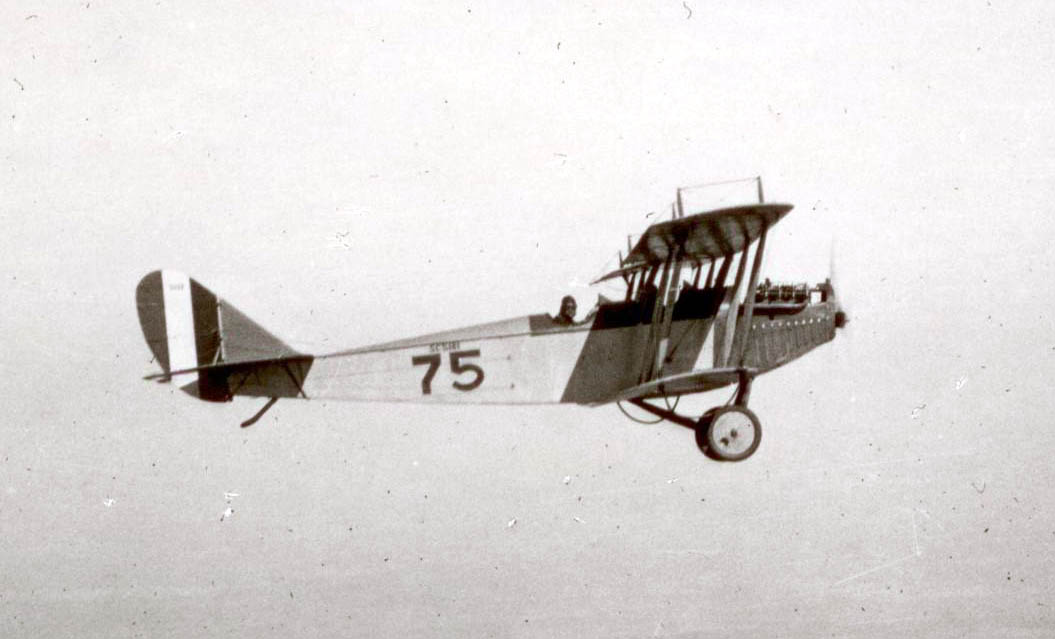
A documented photograph or archival reference connects the interactive model to a real airframe, operation, or preserved example.
A short, rights-screened motion record adds sound, movement, and operational scale without autoplaying or delaying the interactive model.
Jenny's Revival04:48
A newly built, airworthy Curtiss JN-4 reproduction reconnects the type with Scott Air Force Base a century after its service there.
VARIANT NOTE Related-family footage is identified here and is not presented as the exact modeled variant.
REUSE NOTE Embedded without modification. Commercial editorial reuse remains subject to the source record, non-endorsement, trademark, privacy/publicity, and third-party-rights limitations.
The appearance of U.S. Department of War (DoW) visual information does not imply or constitute DoW endorsement.
A short, attributed line restores a human voice to the technical record. Period statements and later recollections are identified by the date label and accompanied by a source link.
“The Jenny taught America to fly.”
Paul E. GarberSmithsonian aviation curator
Garber's concise verdict links wartime instruction to the mass civilian flying culture that followed.
Focused facts connect the airframe's systems to the way it was built, flown, or used.
01
Trainer scale
Thousands of U.S. and Canadian pilots encountered the Jenny during First World War training.
02
Simple power
The water-cooled Curtiss OX-5 made modest power but was familiar and serviceable.
03
Civil afterlife
War-surplus aircraft became inexpensive platforms for barnstorming, wing walking, and passenger rides.
07 · HISTORICAL FIELD NOTE
WHY IT MATTERS.
The Jenny trained thousands of aviators during World War I and later became the airplane most associated with barnstorming across the United States. Surplus aircraft made flying unexpectedly accessible after the war, carrying exhibition pilots, wing walkers, and passengers into towns that had never before seen an airplane up close. [1]
Reference figures vary by variant, payload, configuration, altitude, test method, and source. Values here are an editorial orientation—not operational or flight-planning data.
Each numbered citation links to an operator, national museum, manufacturer, or established research institution. The scope note tells you exactly what that source supports, and each entry includes its retrieval date.
Where the represented model and source variant differ, the scope is labelled rather than silently treated as an exact match. Read the editorial policy, report a correction through the legal notice, or review 3D-model provenance in the attribution directory.