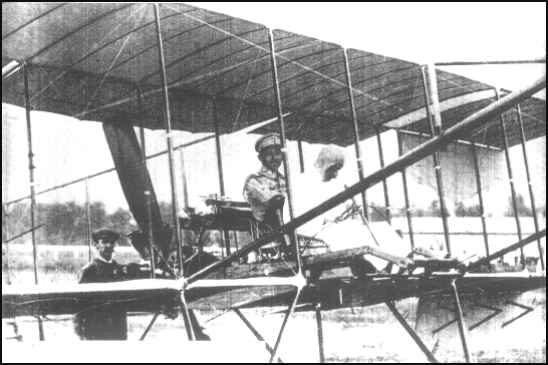
Performance and mechanical data are combined here for a faster, more compact read. Values describe the represented model or nearest clearly identified source variant.
Performance and mechanical specifications for Farman IV
Primary role
Pioneer trainer and touring aircraft
Crew
2
Configuration
Open-frame pusher biplane
Powerplant
1 × Gnome rotary engine
Top speed
40 mph
Ceiling
1,640 ft
Published range
47 mi
Length
≈39 ft
Wingspan
≈34 ft
Gross weight
≈1,200 lb
02 · SERVICE CHRONOLOGY
FROM ORIGIN TO LEGACY.
A dated sequence follows the airframe from development through operational use and later evolution. The number of milestones follows the story rather than a fixed template, and each note explains why the event mattered—not only what happened.
ORIGIN
The Farman pattern evolved through racing, record attempts, and public demonstrations into a widely copied practical biplane. [1]
DEVELOPMENT
Farman-type aircraft turned experimental flying into repeatable instruction and cross-country work. Their open structure also made repair and modification possible for early schools with limited industrial support. [1]
SERVICE HISTORY
Farman-type biplanes entered military trials and early aviation schools, where their stable layout and exposed structure supported instruction, reconnaissance experiments, and field repair. [1]
CONTEXT & LEGACY
Flying schools used Farman machines and local derivatives to teach many of Europe's first military and civilian pilots. [1]
03 · ARCHIVAL IMAGE
THE AIRFRAME IN CONTEXT.
A documented photograph or archival reference connects the interactive model to a real airframe, operation, or preserved example.
A short, attributed line restores a human voice to the technical record. Period statements and later recollections are identified by the date label and accompanied by a source link.
“The aeroplane must become a practical means of travel.”
Henri FarmanPilot and aircraft builder
Farman's practical ambition helps explain why his designs became schools and working aircraft, not just demonstration machines.
Focused facts connect the airframe's systems to the way it was built, flown, or used.
01
Pusher layout
The engine and propeller sat behind the crew, leaving the forward nacelle open and unobstructed.
02
Open structure
Booms and wire bracing made the load paths visible and kept weight low.
03
Lateral control
Ailerons replaced wing warping as Farman designs matured.
06 · HISTORICAL FIELD NOTE
WHY IT MATTERS.
The open-frame Farman IV became an influential early design for training, touring, record flights, and the rapid spread of practical piloting skills. Its straightforward pusher arrangement and forgiving control made it useful at flying schools, where copies and derivatives helped standardize aviation during its experimental first decade. [1]
Reference figures vary by variant, payload, configuration, altitude, test method, and source. Values here are an editorial orientation—not operational or flight-planning data.
Each numbered citation links to an operator, national museum, manufacturer, or established research institution. The scope note tells you exactly what that source supports, and each entry includes its retrieval date.
Where the represented model and source variant differ, the scope is labelled rather than silently treated as an exact match. Read the editorial policy, report a correction through the legal notice, or review 3D-model provenance in the attribution directory.