Performance and mechanical data are combined here for a faster, more compact read. Values describe the represented model or nearest clearly identified source variant.
Performance and mechanical specifications for U-2 Dragon Lady
A dated sequence follows the airframe from development through operational use and later evolution. The number of milestones follows the story rather than a fixed template, and each note explains why the event mattered—not only what happened.
ORIGIN
The first U-2 flew from Groom Lake after a rapid, highly secret development led by Lockheed's Skunk Works. [1]
DEVELOPMENT
After the loss of Francis Gary Powers' aircraft, the program shifted and evolved through larger airframes, new sensors, and continuing research use. [1]
SERVICE HISTORY
Later U-2R and U-2S aircraft grew larger and carried modular sensors for military and scientific missions. High-altitude performance still requires pressure suits, chase cars, and specialized landing technique. [1]
CONTEXT & LEGACY
U-2 imagery helped identify Soviet missile installations in Cuba, making high-altitude reconnaissance central to decisions during the Cuban Missile Crisis. [1]
03 · ARCHIVAL IMAGE
THE AIRFRAME IN CONTEXT.
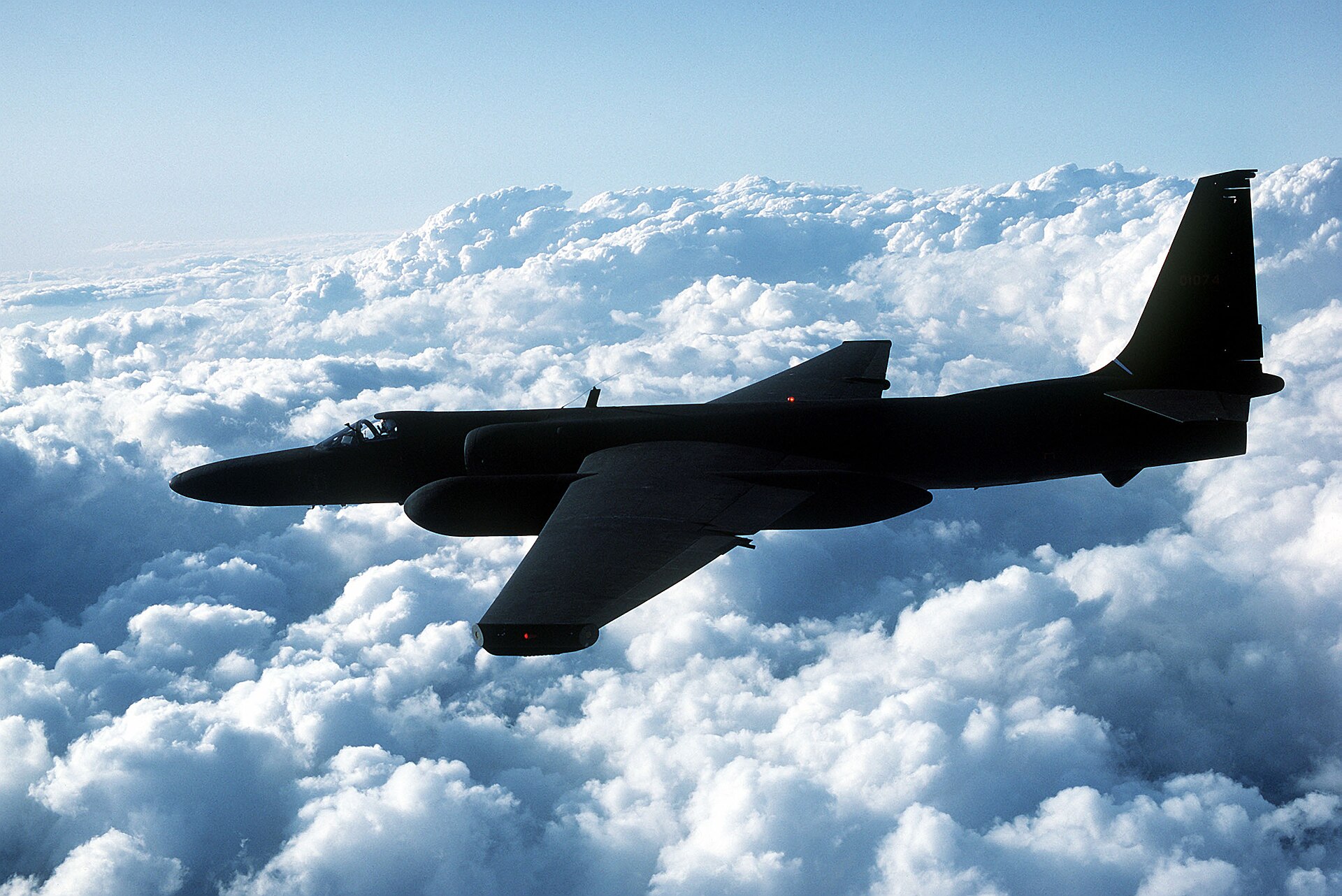
A documented photograph or archival reference connects the interactive model to a real airframe, operation, or preserved example.
Usaf.u2.750pixbetween 1955 and 1998 date QS:P,+1950-00-00T00:00:00Z/7,P1319,+1955-00-00T00:00:00Z/9,P1326,+1998-00-00T00:00:00Z/9 · United States Department of the Air ForceWikimedia Commons · Public domain · Accessed 29 August 2026VIEW ORIGINAL FILE & RIGHTS RECORD ↗
04 · ARCHIVAL FOOTAGE
THE AIRFRAME IN MOTION.
A short, rights-screened motion record adds sound, movement, and operational scale without autoplaying or delaying the interactive model.
U-2 Dragon Lady taxi00:06
A short flight-line view of the U-2 family; the operating aircraft is a later U-2S.
VARIANT NOTE Related-family footage is identified here and is not presented as the exact modeled variant.
REUSE NOTE Embedded without modification. Commercial editorial reuse remains subject to the source record, non-endorsement, trademark, privacy/publicity, and third-party-rights limitations.
The appearance of U.S. Department of War (DoW) visual information does not imply or constitute DoW endorsement.
A short, attributed line restores a human voice to the technical record. Period statements and later recollections are identified by the date label and accompanied by a source link.
“You don't land a U-2. You fly it onto the ground.”
Francis Gary PowersU-2 pilot
Powers' distinction captures the attention and precision demanded by the bicycle landing gear and high-lift wing.
Focused facts connect the airframe's systems to the way it was built, flown, or used.
01
Bicycle undercarriage
Main wheels sit in line beneath the fuselage; detachable wingtip pogos support the aircraft before takeoff.
02
Chase-car landing
A pilot in a fast car radios height and alignment because the long nose and high-lift wing complicate the flare.
03
Pressure protection
Pilots wear full-pressure suits to protect against cabin-pressure loss at extreme altitude.
07 · HISTORICAL FIELD NOTE
WHY IT MATTERS.
Long sailplane-like wings carry the U-2 into the thin air above 70,000 feet for strategic intelligence collection and atmospheric research. That altitude brings extraordinary reach but also a narrow margin between stall and maximum speed, making precise energy control, pressure-suit operations, and assisted landings central to every mission. [1]
Reference figures vary by variant, payload, configuration, altitude, test method, and source. Values here are an editorial orientation—not operational or flight-planning data.
Each numbered citation links to an operator, national museum, manufacturer, or established research institution. The scope note tells you exactly what that source supports, and each entry includes its retrieval date.
Where the represented model and source variant differ, the scope is labelled rather than silently treated as an exact match. Read the editorial policy, report a correction through the legal notice, or review 3D-model provenance in the attribution directory.